

runs-on label of the benchmark job.
Prerequisites
CodSpeedHQ/action >= 3.1.0.- A GitHub organization. Registering a self-hosted runner on a repository rather than on an organization needs the Repository: Administration permission, which is too broad, so macro runners are not available on personal accounts. Transfer the repository to an organization to use them.
- CodSpeed enabled on the repository.
1. Point the benchmark job at a macro runner
Replaceruns-on: ubuntu-latest with the label of the
runner you want, and set the mode of the
action to walltime:
- AMD Ryzen 9950X
- AWS Graviton
2. Open a pull request
Open a pull request from the branch carrying the change: the benchmark job runs on a macro runner and the pull request receives its performance report. The walltime measurements of a run are comparable to the baseline recorded on your default branch only if both ran on macro runners, so merge the change to record a first baseline on a macro runner.Repository access
Private repositories
Macro runners work with the private repositories of your organization without further setup.Public repositories
GitHub keeps self-hosted runners away from public repositories by default, since a pull request from a fork could run code on them. To use macro runners on a public repository, go to Organization Settings → Actions → Runner groups → Default in GitHub and allow public repositories: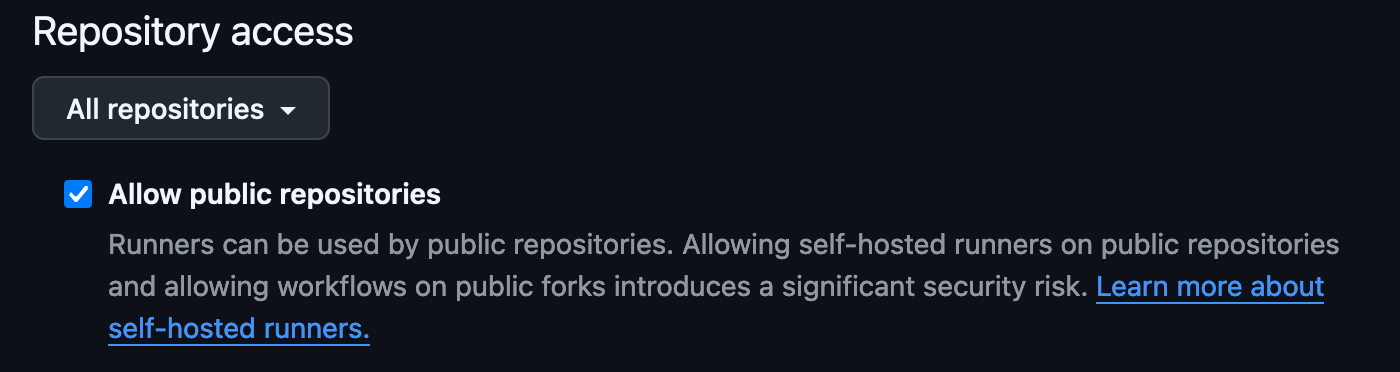
A former label keeps working and lands on the same runner as the current one:
codspeed-macro-x86-ryzen-9950x-ubuntu-24-04forcodspeed-macro-x64-ryzen-9950x-ubuntu-24-04.codspeed-macroforcodspeed-macro-arm64-graviton-ubuntu-22-04, the label the Graviton runner had before the machines were named individually.
Next Steps
Macro Runners
The runners, and what they are for
Walltime Instrument
Measure and interpret walltime benchmarks
Configure GitHub Actions
Authentication, parallel jobs and advanced options
Performance Checks
Catch regressions on every pull request